Subscribe to the Amplifying Research podcast:
Apple Podcasts | Spotify | Overcast | Pocketcasts
Episode show notes
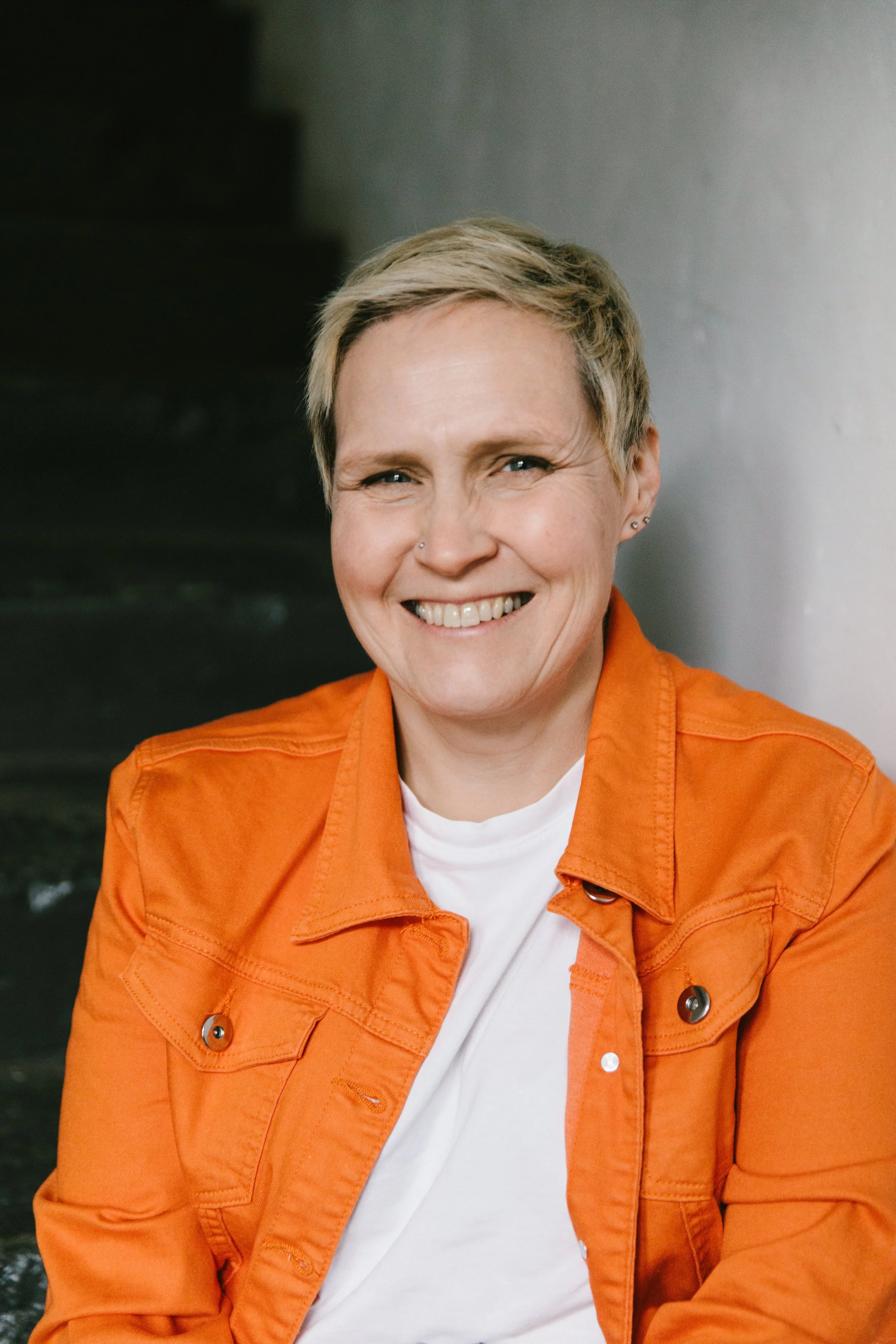
Be honest: how many meetings, workshops, or conferences have you attended that felt like a waste of your time? Dr Sarah McLusky argues that most academic gatherings fail not because of bad content, but because no one stopped to ask why they were bringing people together in the first place.
Sarah is a research communicator, facilitator, and host of the Research Adjacent podcast — and she's spent years helping teams design gatherings that build trust, spark collaboration, and leave people feeling their time was genuinely well spent. In this episode, we unpack how to move beyond inherited templates and create in-person experiences that actually achieve what you need them to.
"What makes people turn up in the room on the day is the agenda, the talks, the subjects they're interested in — that's what gets people through the door. But actually what people remember afterwards, what they take away from it, is the people that they met." — Dr Sarah McLusky
Sarah brings extensive experience helping research teams, charities, and other organisations design meaningful in-person experiences — from stakeholder engagement workshops to patient involvement sessions to team away days. She's particularly passionate about creating spaces where different voices can genuinely be heard, and where power dynamics don't shut down the very contributions you're trying to invite.
This episode is a must-listen for anyone who organises meetings, runs workshops, or plans events — and suspects there might be a better way. Whether you're rethinking your team's regular catch-ups or planning a major stakeholder engagement session, Sarah offers practical wisdom on making gatherings that genuinely matter.
Our conversation covers:
Why human connection is the real value of in-person gatherings (not the content)
When to bring people together in person — and when it really could just be an email
The different types of gatherings researchers should be thinking about (hint: not everything needs to be a seminar)
How inherited templates and "this is how we've always done it" thinking undermine event effectiveness
Creating psychological safety and comfort so people can actually contribute
Managing power dynamics — including the rule that "the academic never speaks first"
Practical facilitation techniques, including Sarah's favourite icebreaker
The role of professional staff in event organisation (and the dynamics that can make this tricky)
When to bring in an external facilitator
Quick wins you can implement immediately to improve your gatherings
Find Sarah online:
LinkedIn — https://www.linkedin.com/in/sarahmclusky/
Newsletter: Gathering with Purpose — https://sarahmclusky.com/gathering-with-purpose
Research Adjacent podcast — https://researchadjacent.com/podcast/

Practical tips:
Start with purpose, not templates:
Before booking a room or drafting an agenda, ask fundamental questions about why you're bringing people together and what you want them to leave with.
"The big problem is that people just don't really think through the point of them, and they don't think through why they're getting people together and what they want people to go away with after the event. There's just this sense of, 'Oh, well, this is how it's always been done.'" — Sarah McLusky
Remember that connection trumps content:
People may show up for the agenda, but what they'll remember — and what builds lasting professional relationships — is the people they met.
"What makes people turn up in the room on the day is the agenda, the talks, the subjects they're interested in — that's what gets people through the door. But actually what people remember afterwards, what they take away from it, is the people that they met." — Sarah McLusky
Use in-person gatherings as a trust-building shortcut:
Face-to-face time accelerates relationship-building in ways that emails and video calls simply cannot match — particularly important for stakeholder engagement and interdisciplinary collaboration.
"I would say it's a shortcut. It's a strange thing to say, because sometimes it can take a very long time to build those relationships and build that trust. But the shortcut is doing it in person, face to face, because it's much quicker than over emails and online conversations." — Sarah McLusky
Strip back the content — seriously:
Resist the urge to pack agendas with back-to-back presentations. Our brains can't absorb continuous information delivery.
"Never, ever talk for more than ten minutes without giving people something to do. So that might not necessarily need to be much — it could just be ask a question, or you give them a poll, or you show them a video instead of talking. But never more than ten minutes continuous, because our brains can't cope with it." — Sarah McLusky
Think carefully about who speaks (and when):
The order and duration of speakers implicitly signals who matters most. If you want to genuinely hear from stakeholders, community members, or junior researchers, give them the platform first.
"One thing that's a really good rule of thumb is that the academic never speaks first — it's always somebody else that speaks first. Because it's really easy to create these spaces where you say, 'Oh, we want to hear from people,' and then somebody presents for half an hour on their opinion, and then you end up in groupthink." — Sarah McLusky
Design for psychological safety, not just physical comfort:
Catering and comfortable rooms matter, but so does creating an environment where people feel safe to contribute — especially when there are power differentials in the room.
"At the bottom of Maslow's Hierarchy of Needs, you've got people's basic needs — food, shelter, comfort. But then the next level is a feeling of belonging and a feeling of being safe. And I think that's something that often gets missed. We do the bottom rung — 'yeah, let's do the catering' — but we don't do enough of creating spaces where people feel safe, where people feel welcome." — Sarah McLusky
Facilitate networking — don't just hope it happens:
Unstructured "mingle with canapés" networking is uncomfortable for almost everyone and typically results in people talking only to those they already know.
"Those 'turn up and just hope that you bump into somebody nice' are horrible for everybody, because everybody just talks to their mates and they don't meet new people. So actually there needs to be more facilitation around that and more helping people to connect and find each other." — Sarah McLusky
Create multiple pathways for participation:
Not everyone is comfortable putting their hand up in front of senior colleagues. Offer alternatives like written questions, anonymous submission via tools like Slido or Mentimeter, or questions submitted in advance.
"For a lot of people, putting their hand up and asking a question is an incredibly vulnerable thing to do, especially if you're in a room with a lot of very senior, very powerful people... Could we get people to write down questions on bits of paper and then somebody else reads them out? Could we get questions submitted in advance so that people don't have to put their hand up on the day?" — Sarah McLusky
Don't organise events by committee:
Distributed responsibility leads to dropped balls. One person should own the logistics (room, catering, RSVPs), though the agenda and content can be a separate responsibility.
"There has to ultimately be one person who is responsible for booking the meeting room, calling the caterer... I do not believe in organising events by committee. In my experience, it doesn't work because there's always some ball that gets dropped somewhere and nobody notices until you're sitting in the room and there's no coffee." — Sarah McLusky
Gather feedback through observation, not just surveys:
Pay attention to body language, who shows up for what, and what people talk about informally. These signals often tell you more than a feedback form.
"Gathering feedback doesn't always have to be about getting a survey form completed. Sometimes it's just listening and paying attention — paying attention to people's body language, paying attention to who shows up for which things. People vote with their feet." — Sarah McLusky
Pilot changes in low-stakes settings:
If you want to try something new but aren't sure how it will land, test it in a smaller workshop before proposing it for the all-hands meeting.
"You could potentially pilot some of these things that you're not going to ask permission for in lower-stakes situations. So maybe rather than trying to do something big for an all-hands meeting, is there a small workshop where you can feel relatively comfortable that even if things go wrong, it's really not that big of a deal?" — Chris Pahlow
Consider when to bring in an external facilitator:
External facilitation is particularly valuable when there are power differentials, potential tensions, or when you need someone without a vested interest to keep things on track.
"People show up differently when there's an external person on site — they're slightly on their best behaviour. So I think that can be really valuable, particularly if you have got a group where there are some tensions or you think there might be some tensions." — Sarah McLusky
Credits:
Host & Producer: Chris Pahlow
Edited by: Laura Carolina Corrigan
Music by: La Boucle and Blue Steel, courtesy of Epidemic Sound
- Public engagement
- Career development
- Knowledge mobilisation
- Team alignment
- Stakeholder/audience mapping
- Storytelling
- Leadership
- Strategic comms
- Community engagement
- Collaborating with professional staff
- Talks and presentations
- Making your work relatable
- Co-design
- Communicating in different formats/mediums
- Interdisciplinary collaboration
- Strategy
- Impact planning
- Behaviour change
- Your pitch
- Networking