48. Collaborative Research – Mindset: Dr L. Michelle Bennett on building the collaborative mindset researchers are almost never taught
Subscribe to the Amplifying Research podcast:
Apple Podcasts | Spotify | Overcast | Pocketcasts
Episode show notes
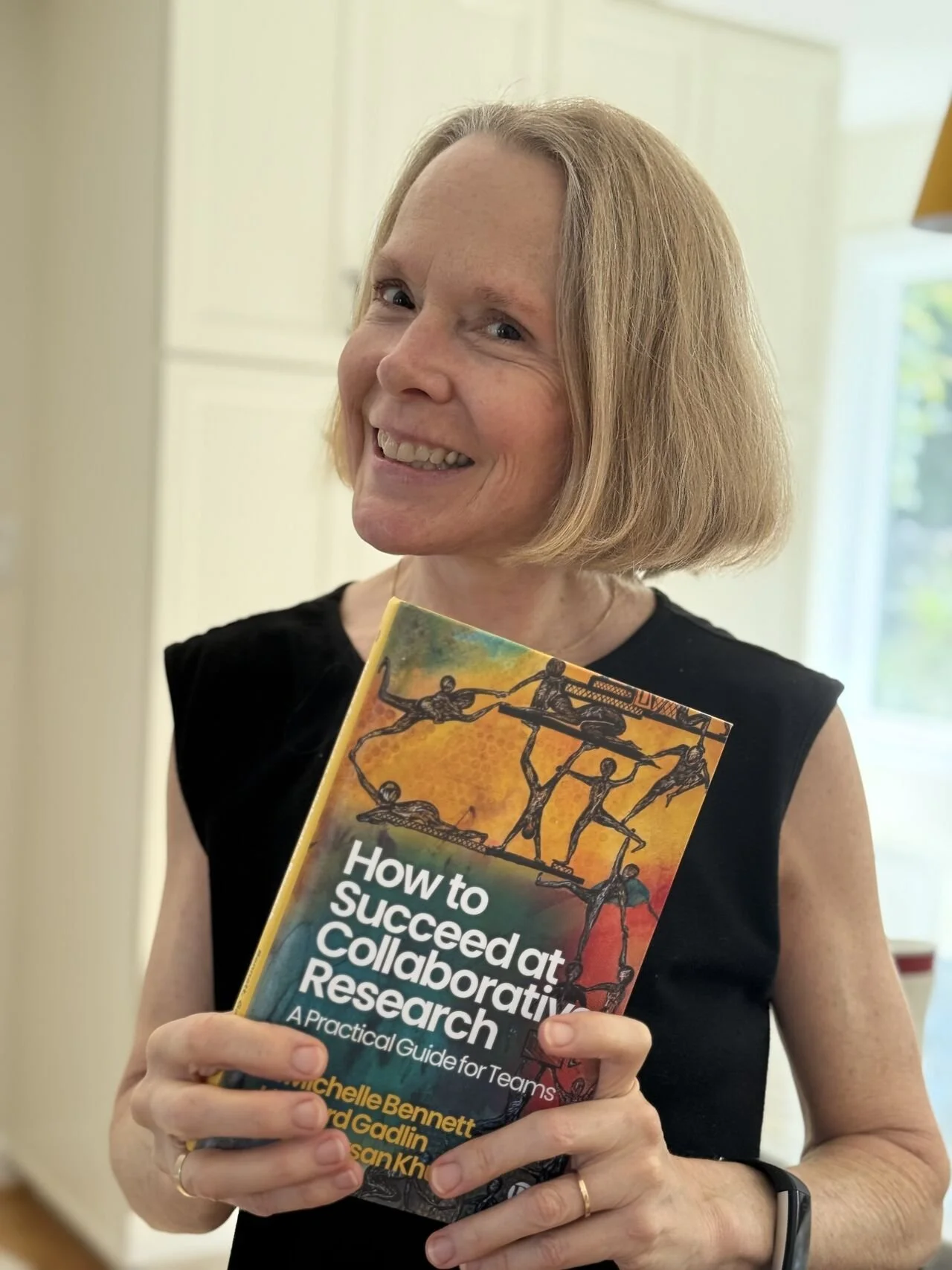
Most research teams believe they collaborate well — until the first real disagreement, the first authorship dispute, or the first time someone bites their tongue instead of speaking up. Researchers are rigorously trained in methodology but given almost no preparation for the relational skills that hold a collaboration together — and when tension rises, most default to a self-protective mode that quietly erodes trust, psychological safety, and ultimately the science itself. In this episode, Dr L. Michelle Bennett unpacks what a genuinely collaborative mindset looks like in practice, and how something as concrete as a collaboration agreement can give your team the structure it needs to do its best work.
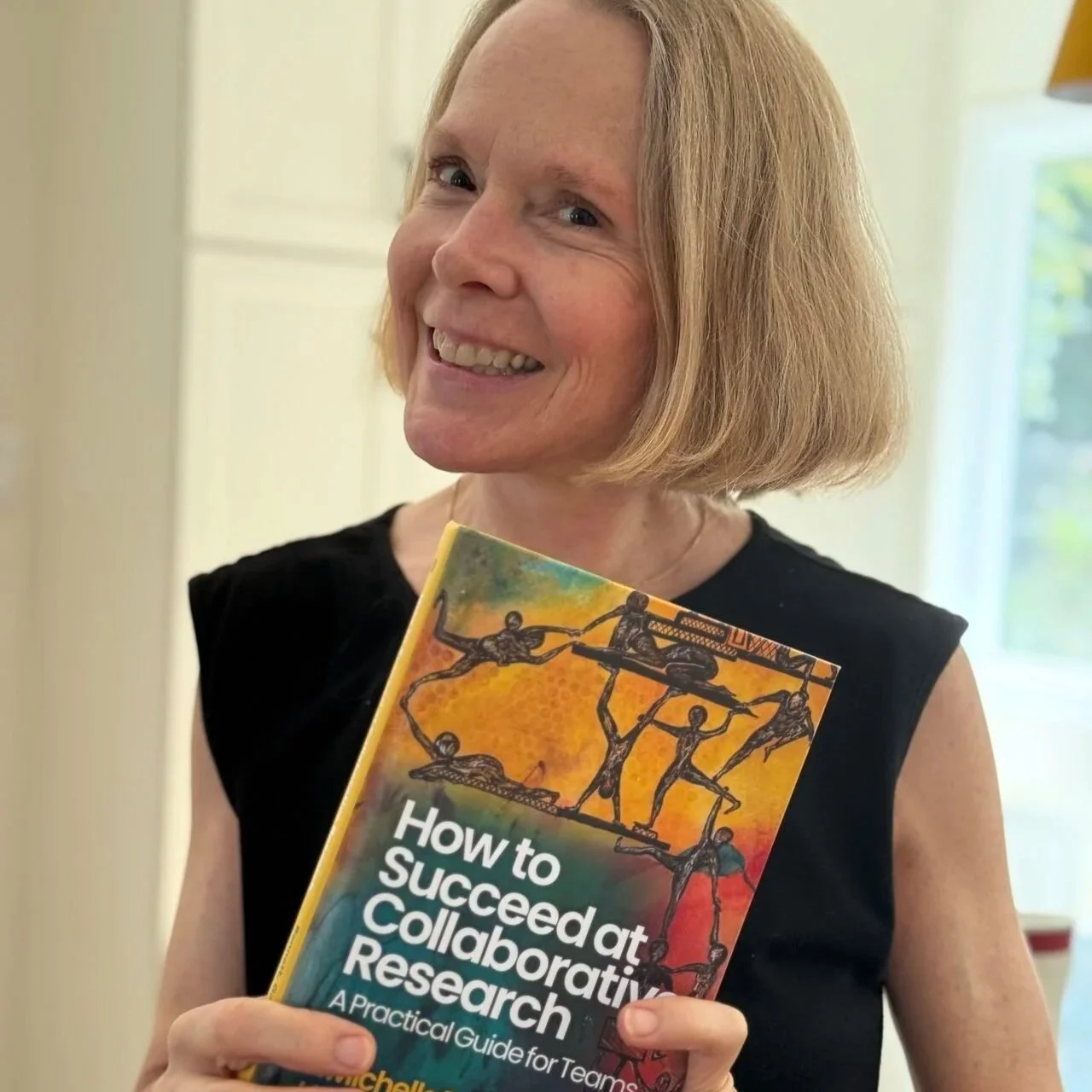
This is the first episode in a three-part miniseries based on the book How to Succeed at Collaborative Research, co-authored by Michelle, Howard Gadlin and Dr Sawsan Khuri. All three authors join the conversation to introduce the series before Michelle takes the deep dive on collaborative mindset. Upcoming episodes cover productive conflict (Howard) and collaborating with AI (Sawsan).
Michelle spent more than twenty years working with research teams at the US National Cancer Institute, where she helped launch interdisciplinary collaborations and saw first-hand what made the difference between teams that thrived and teams that quietly fell apart. Howard spent his career as an ombudsman helping researchers resolve conflicts at Harvard, the NIH, UCLA and beyond. Sawsan teaches medical genetics at the University of Exeter and runs a consulting company, Collaborative Capacities.
"When we start talking about or people start talking about power over other people, that's not collaborative. So using your power to reward people or punish people, from my perspective, is not ethical. That takes away people's ability to speak up, share their different perspectives, and ensure conscious choice." — L. Michelle Bennett
Whether you're a research leader wondering whether your team is as collaborative as you think, an operations lead looking for practical tools to strengthen team dynamics, or an early-career researcher navigating the power structures of your first collaboration, this episode offers a concrete framework for building the kind of team culture that makes better science possible.
Our conversation covers:
The collaborative mindset vs the unilateral mindset — and why tension is the trigger that flips most people from one to the other
Why collaboration sounds easy but researchers are almost never trained for it
Self-awareness as the starting point for becoming a better collaborator
Naive realism — the assumption that everyone sees things the way you do
What a collaboration agreement actually looks like (and why one team's took nine months)
The "popcorn" technique — how one team built a code word for difficult conversations
How leaders model behaviour whether they intend to or not
The ethical case for creating psychologically safe research environments
Power dynamics — why positional power should only be used to raise all boats
A 15-minute check-in format any team can start using immediately
Signs of hope: how one institution transformed its tenure and promotion process to genuinely reward collaboration
Find Michelle online:
LinkedIn — https://www.linkedin.com/in/l-michelle-bennett-50855a10
LMBennett Consulting — https://www.lmbennettconsulting.com
Find Howard online:
Find Sawsan online:
LinkedIn — https://www.linkedin.com/in/sawsan-khuri
Collaborative Capacities — https://collaborativecapacities.com
Things mentioned:
Blink by Malcolm Gladwell
Adam Grant — "speak as though you're right and listen as though you are wrong"

Credits:
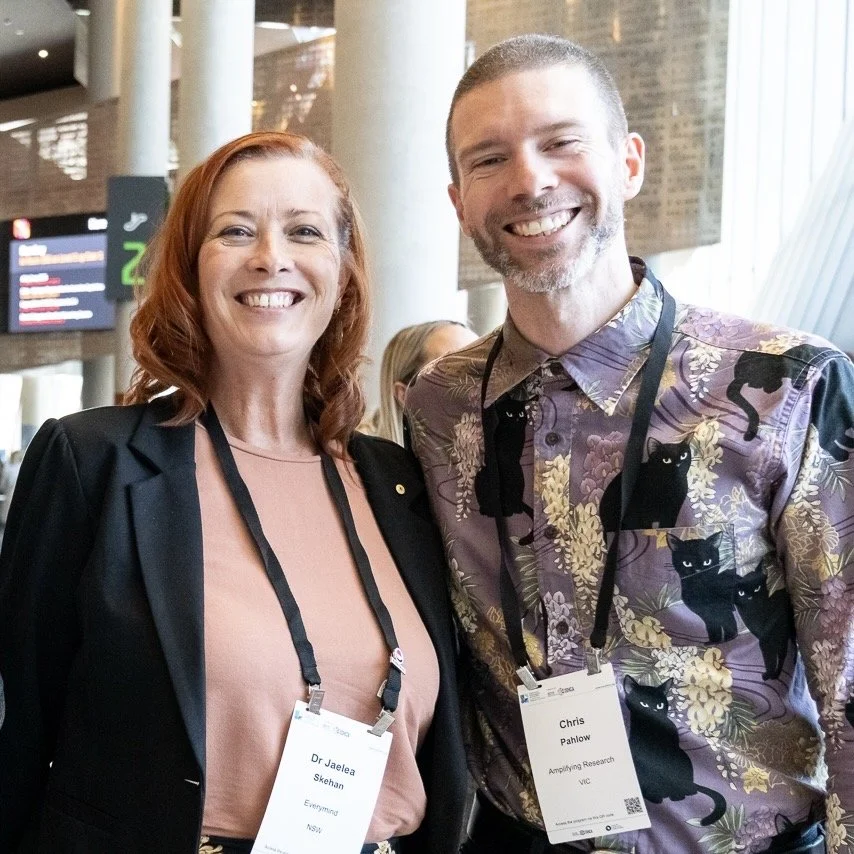
Host & Producer: Chris Pahlow
Edited by: Laura Carolina Corrigan
Music by: La Boucle and Blue Steel, courtesy of Epidemic Sound
- Public engagement
- Career development
- Knowledge mobilisation
- Stakeholder/audience mapping
- Storytelling
- Team alignment
- Strategic comms
- Community engagement
- Leadership
- Collaborating with professional staff
- Talks and presentations
- Making your work relatable
- Co-design
- Communicating in different formats/mediums
- Interdisciplinary collaboration
- Strategy
- Impact planning
- Behaviour change
- Your pitch
- Networking
Practical tips:
Start with self-awareness — it's the foundation, not a luxury:
Before worrying about team dynamics, take stock of yourself. Can you articulate your strengths and weaknesses? Do you know what your assumptions are? Are you open to feedback? Michelle argues that self-awareness is the non-negotiable starting point for becoming a better collaborator — and that most researchers have never been asked to develop it.
"People who can articulate their strengths and their weaknesses, who know what their values are and what their beliefs are, what their assumptions are, and perhaps even more importantly, are open to feedback from other people so that they can further develop their skills and their abilities." — L. Michelle Bennett
Watch for naive realism — the assumption that everyone sees things the way you do:
It's natural to assume your perspective is shared. But all you have to do is ask two people in a disagreement what just happened — you'll hear two dramatically different stories. Recognising that your version of events is always partial is the first step toward productive dialogue.
"We probably all go around all day long, assuming everybody sees things just the way we're seeing them. But all you have to do is be in a conversation with two people who are in a disagreement and then ask each of them what just happened. You'll hear two dramatically different stories." — L. Michelle Bennett
Know the difference between a collaborative and a unilateral mindset — and notice when you flip:
The collaborative mindset is transparent, curious, reliable, and fully present. The unilateral mindset wants to win, needs to be right, blames others, and gets defensive. Most people operate collaboratively when things are going well — the real test is what happens when tension rises.
"As soon as there's any bit of tension or somebody's feeling uncomfortable or somebody feels like they've been personally attacked — any point in time where the tensions start rising a little bit — that's where people will oftentimes jump to that unilateral mindset." — L. Michelle Bennett
Build a collaboration agreement — and make it as specific as an SOP:
Don't stop at agreeing on values. A collaboration agreement should be prescriptive enough that everyone knows exactly what to do in difficult moments — how to initiate a hard conversation, how decisions get made, how authorship will be handled, how often the agreement itself gets reviewed. One team Michelle worked with adopted the code word "popcorn" to signal "I need to have a difficult conversation with you" — and it worked because everyone knew what was coming and what to expect.
"When I say collaborative agreement, I mean something that's very specific. You've been in a laboratory setting where people have standard operating procedures, right? Step one, step two, step three, step four. That's what I see when I see a collaboration agreement." — L. Michelle Bennett
Use a 15-minute check-in to surface problems before they erupt:
Take fifteen minutes at the start of every team meeting and ask three questions: What's been working well? What hasn't been working well? What could we be doing better? It's low-cost, it creates regular space for small issues to surface, and it prevents the slow build-up that leads to eruptions.
"If you make space for that every week, just 15 minutes, the little things will come up. And then you don't have to have people be in a situation where they're suppressing the urge to say there's a problem, suppressing, suppressing, suppressing. Because you know what happens when you suppress, suppress, suppress — it's like a volcano." — L. Michelle Bennett
Approach difficult conversations as dialogue, not a telling session:
Enter with a collaborative mindset — transparent, curious, no assumptions. Invite the other person into the conversation rather than ambushing them. Check in constantly: "This is what I think I heard you say — do you remember it that way?" Treat observable behaviour as data, just as you would in the lab — "I noticed you rolled your eyes just then. Am I reading that right?"
"If we can approach the conversation with the most open mind in the world and say, hey Chris, I want to talk to you about something that's really difficult. It's about a conversation we had last week, and it kind of left me feeling uncomfortable. Would you be willing to spend some time talking to me about that?" — L. Michelle Bennett
Recognise that everyone on the team brings power — not just the person with the title:
Positional power is obvious, but it's only one kind. Someone might bring specialist expertise, a network, technical skills, or institutional knowledge. Giving every team member a chance to name the power they bring can rebalance dynamics and help people see their contribution as legitimate — especially those without seniority.
"Everybody on the team has some power they're bringing to the team. And if you give the team an opportunity to talk through what are these different powers that people bring, that can start even kind of just equalling things out." — L. Michelle Bennett
For leaders — your behaviour is the culture, whether you intend it or not:
People don't follow what a leader says; they follow what a leader does. If a leader espouses collaboration but dismisses ideas, avoids difficult conversations, or makes unilateral decisions, the team will model that behaviour. Michelle frames this as an ethical responsibility: positional power should only ever be used to raise all boats, never to reward or punish.
"If there's doing one thing and saying another, people are going to catch on to that really quickly. And they're not going to do what the leader says, they're going to do what the leader does, because ultimately that's what the leader is modelling." — L. Michelle Bennett