50. Collaborative Research – AI: Dr Sawsan Khuri on what happens to trust when your team starts using AI
Subscribe to the Amplifying Research podcast:
Apple Podcasts | Spotify | Overcast | Pocketcasts
Episode show notes

Generative AI has quickly become part of how many researchers work. But in most teams, the conversation about how it's being used, which tools are trusted, and who's checking the outputs simply hasn't happened yet. Dr Sawsan Khuri argues that transparency is key if we want AI to strengthen, rather than fracture, our research collaborations. She talks us through practical tips for bringing AI into your team's work openly.
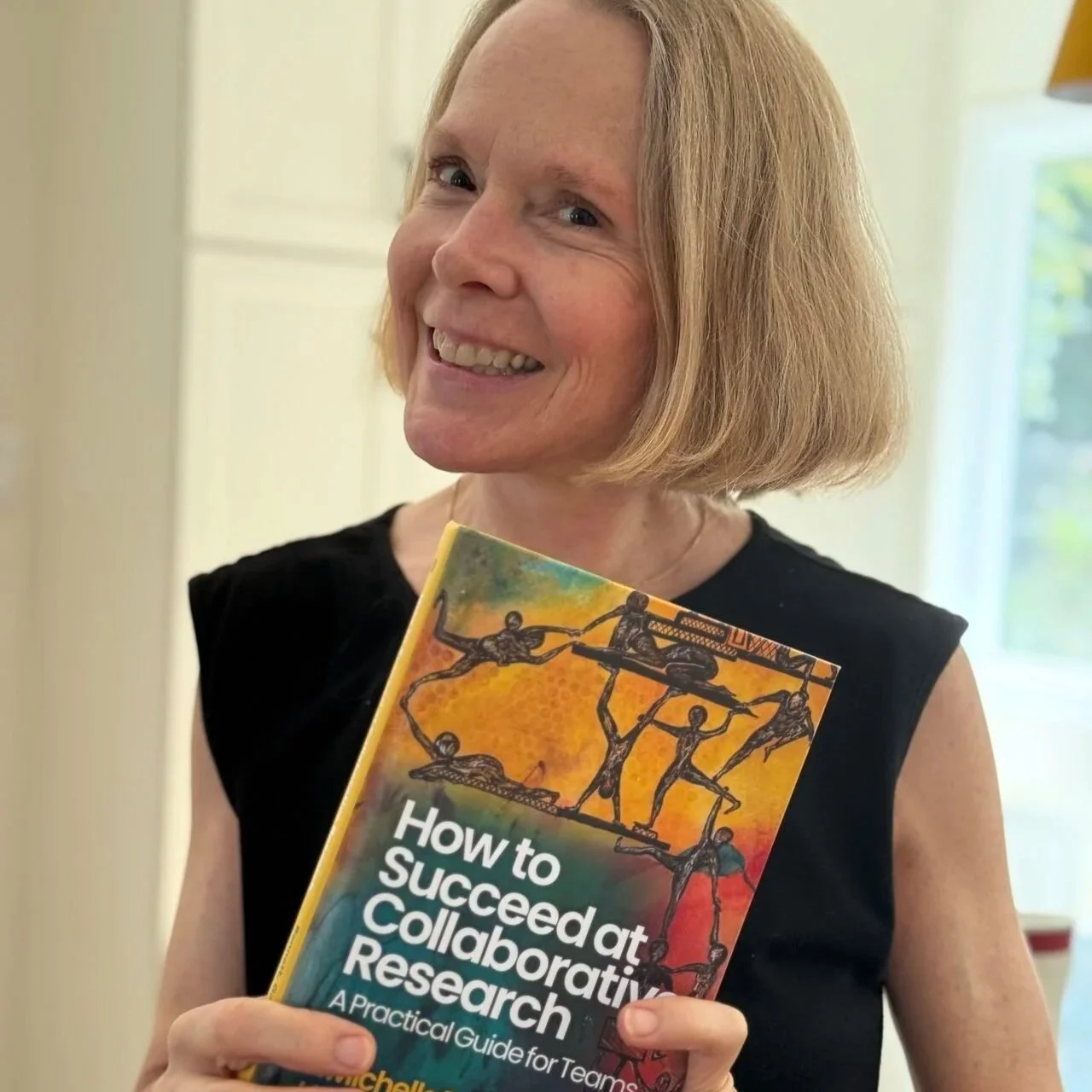
This is the final episode in our three-part miniseries based on the book How to Succeed at Collaborative Research, co-authored by Sawsan, Howard Gadlin, and Dr L. Michelle Bennett.
All three authors join the conversation — Michelle and Howard open the episode by sharing where they each sit with AI right now, before Sawsan takes the deep dive on what it means for collaborative research. The series wraps up with each author offering a final takeaway from the book.
Sawsan teaches medical genetics at the University of Exeter and runs a consulting company, Collaborative Capacities. She describes herself as an AI practitioner — someone who uses multiple AI platforms daily in her research, navigates the thorny challenge of assessing students when AI-generated answers are everywhere, and works with research teams to build the transparency habits she advocates for in this episode.
In episode 48, Michelle explored the collaborative mindset: the self-awareness, trust, and structured agreements that hold a team together. In episode 49, Howard unpacked what decades of mediating scientific disputes taught him about turning conflict into something productive. This episode extends those same principles — trust, transparency, open conversation — into the fast-moving territory of AI.
"If there are skeptics in that room, you need to also bring them into that task. You're inviting them into the game by saying, 'Would you check it for me?' Be very transparent about what prompts you're using so that people can check you and check the results. That way you've started that two-way communication about let's do this together as a team." — Sawsan Khuri
Whether you're a research leader trying to set a team-wide approach to AI, an operations lead looking for practical frameworks to guide the conversation, or an early-career researcher wondering whether it's OK to admit you've been using ChatGPT — this episode offers a concrete, non-judgmental path forward.
Our conversation covers:
How researchers are using generative AI right now: literature search, information gathering, and beyond
The three layers of transparency: what you're using AI for, which tool and why, and how you're checking the outputs
Trust at three levels — trusting yourself with prompts, trusting the tool, and earning your team's trust
The counterintuitive way to bring AI skeptics on board
Agentic AI: Stanford's virtual lab of AI agents and what it means for interdisciplinary research
Vibe coding and the checks and balances it demands
Why governance and regulation are coming to academic AI use
Human curiosity and integrative thinking
How to start the AI conversation if your team hasn't had one yet
A cautionary tale: what happened when grad students used AI to write code without telling anyone
The series wrap-up: each author's final takeaway from How to Succeed at Collaborative Research
Find Sawsan online:
LinkedIn — https://www.linkedin.com/in/sawsan-khuri
Collaborative Capacities — https://collaborativecapacities.com
Find Howard online:
Find Michelle online:
LinkedIn — https://www.linkedin.com/in/l-michelle-bennett-50855a10
LMBennett Consulting — https://www.lmbennettconsulting.com
Things mentioned:
Stanford's Virtual Lab of AI Agents — Stanford Report
Vibe Coding Omics Data Analysis Applications — Jesse Meyer, Journal of Proteome Research



Credits:
Host & Producer: Chris Pahlow
Edited by: Laura Carolina Corrigan
Music by: La Boucle and Blue Steel, courtesy of Epidemic Sound
- Public engagement
- Career development
- Knowledge mobilisation
- Team alignment
- Stakeholder/audience mapping
- Storytelling
- Leadership
- Strategic comms
- Community engagement
- Collaborating with professional staff
- Talks and presentations
- Making your work relatable
- Co-design
- Communicating in different formats/mediums
- Interdisciplinary collaboration
- Strategy
- Impact planning
- Behaviour change
- Your pitch
- Networking
Practical tips:
Be transparent about three things — and make the third one count:
The first two layers of transparency are straightforward: what you're using AI for, and which tool you've chosen. But it's the third layer — how you're checking the outputs — that changes the dynamic. When you can articulate your checking process, you shift the conversation from "should we use AI?" to "how do we use it well?"
"Everyone needs to be absolutely clear about what they are using AI for, which AI they are using, and why they chose that tool over another. And then there's another layer of transparency, a very important third layer, which is how you're checking the answers. Because any skeptics in the room, that's what they want to hear about." — Sawsan Khuri
Bring skeptics into the process rather than trying to persuade them:
When someone on your team resists AI, the temptation is to argue your case. Sawsan's approach is the opposite — invite them to check your work, verify your outputs, even suggest which tools to try. The resistance often softens when skeptics are given a role rather than a lecture. You might not end up using AI for everything, but you've kept the team together.
"Try not to persuade people that your way is correct, whether it is for or against or in the middle of AI. Try to listen to the others and find somewhere in the middle that you will all agree about." — Sawsan Khuri
Test the same prompt across multiple platforms:
Different AI tools have different strengths and blind spots. Running the same prompt through two or more platforms helps you calibrate which tools you trust for which tasks — and gives you a richer dataset to work from. If two platforms agree, your confidence grows. If they diverge, you know where to dig deeper.
"I use three or four different tools. I ask them all exactly the same question. I get different answers, and then I'm using my judgment to figure out which one to go with." — Sawsan Khuri
Build your prompting skills through iteration:
Prompt quality is the single biggest determinant of output quality — and it's a skill that develops with practice. Don't settle for your first attempt. Try different phrasings, different levels of specificity, and compare what comes back.
"Try writing one prompt, try asking the same thing in a different way, and see what you're getting back, just to give you that confidence that you've finally got the prompt that will give you the answer that you're seeking. Remember to always ask for the references, the citations, so that it gives them to you and you can refer back to them." — Sawsan Khuri
If you're vibe coding, get the code checked:
Vibe coding — using AI to write code from plain English prompts — has been a game changer for researchers who don't code. But the convenience comes with a catch: if you didn't write the code, you may not spot its vulnerabilities. Before anything goes public, have someone who understands code review it properly.
"If you're producing something that is for the public using vibe coding, you need to get a software engineer, a computer scientist to check the code for you. You need to run it on multiple systems to make sure that it runs as you expect it to run, and you need to test it with the widest possible variety of data to make sure it's giving you what it should be giving you." — Sawsan Khuri
Put AI on your next team meeting agenda:
If your team hasn't had an explicit conversation about AI use, the default isn't "no one's using it" — it's "people are using it without talking about it." Journals are already requiring disclosure. The conversation needs to happen, and someone needs to be the one to put it on the agenda.
"If they're not talking about it, they should be. I would urge team members to put it on the agenda for the next team meeting, or even have a specific team meeting about the use of AI. 'Hey, there's this tool. Anyone using it? Let's be transparent. What do we think? What do we as a team, what's our policy about this?'" — Sawsan Khuri
Save your prompts — not just the outputs:
It's easy to copy an AI's output and move on, but the prompt that generated it is equally important. Documenting what you asked — and how you asked it — creates a trail that colleagues can review, replicate, and build on. Some platforms make it easy to save outputs but not prompts, so you may need to do this manually.
"Document what you're doing, save your prompts, because sometimes some of the AIs that I'm using, you can copy paste the output, but it doesn't copy paste the prompt. You need to be saving your prompts. You need to know what you're asking it, and then checking the answers against some other metric. Don't just believe it." — Sawsan Khuri